
Denmark requires animals to be stunned before slaughter, including slaughter carried out according to religious rituals. The requirement is real, but it is not a new announcement: the restriction on religious slaughter without prior stunning took effect in February 2014.
That distinction matters when the policy appears in social media posts. Denmark has not banned all kosher or halal meat. Its rules govern how animals may be slaughtered domestically, while imported meat remains a separate issue.
What Denmark’s current guidance says
The Danish Veterinary and Food Administration says cattle, sheep, goats and broiler chickens may be slaughtered according to religious rituals if they are stunned beforehand and the slaughter takes place at a slaughterhouse. Facilities must notify the authority of the activity, which may begin only after the relevant checks and authorization update.
The guidance also requires animals not to regain consciousness before death. It specifies conditions for stunning equipment and corrective action if the first attempt fails. These requirements concern the slaughter process; they should not be presented as a guarantee that animals experience no distress anywhere in the food system.
A rule dating back to 2014
A Library of Congress legal report records that the relevant measures entered into force on February 17, 2014. The report explains that the prior-stunning requirement effectively prevents traditional kosher slaughter domestically. It also applies to halal slaughter performed without prior stunning.
Describing the rule as a new ban in 2026 would therefore leave out essential context. This is an explanation of an established policy, rather than reporting a newly enacted measure.
Religious meat is not banned altogether
The U.S. State Department’s report on Denmark distinguishes the prohibition on slaughter without prior stunning from the availability of meat: religious slaughter with prior stunning is permitted under the applicable rules, and halal and kosher meat may be imported.
Legal permission and religious acceptability are different questions. Readers should not assume that every religious community accepts the same slaughter method, or that Denmark’s domestic requirement means all kosher and halal products are prohibited.

Why the distinction matters for animal welfare
The Danish guidance focuses on prior stunning, the conditions under which religious slaughter may take place, and preventing animals from regaining consciousness before death. Those are concrete welfare requirements that can be discussed accurately without treating a longstanding policy as breaking news.
For readers concerned about animals, the strongest account is also the clearest: Denmark prohibits domestic religious slaughter without prior stunning, the requirement dates to 2014, and it does not amount to a blanket ban on kosher or halal meat.
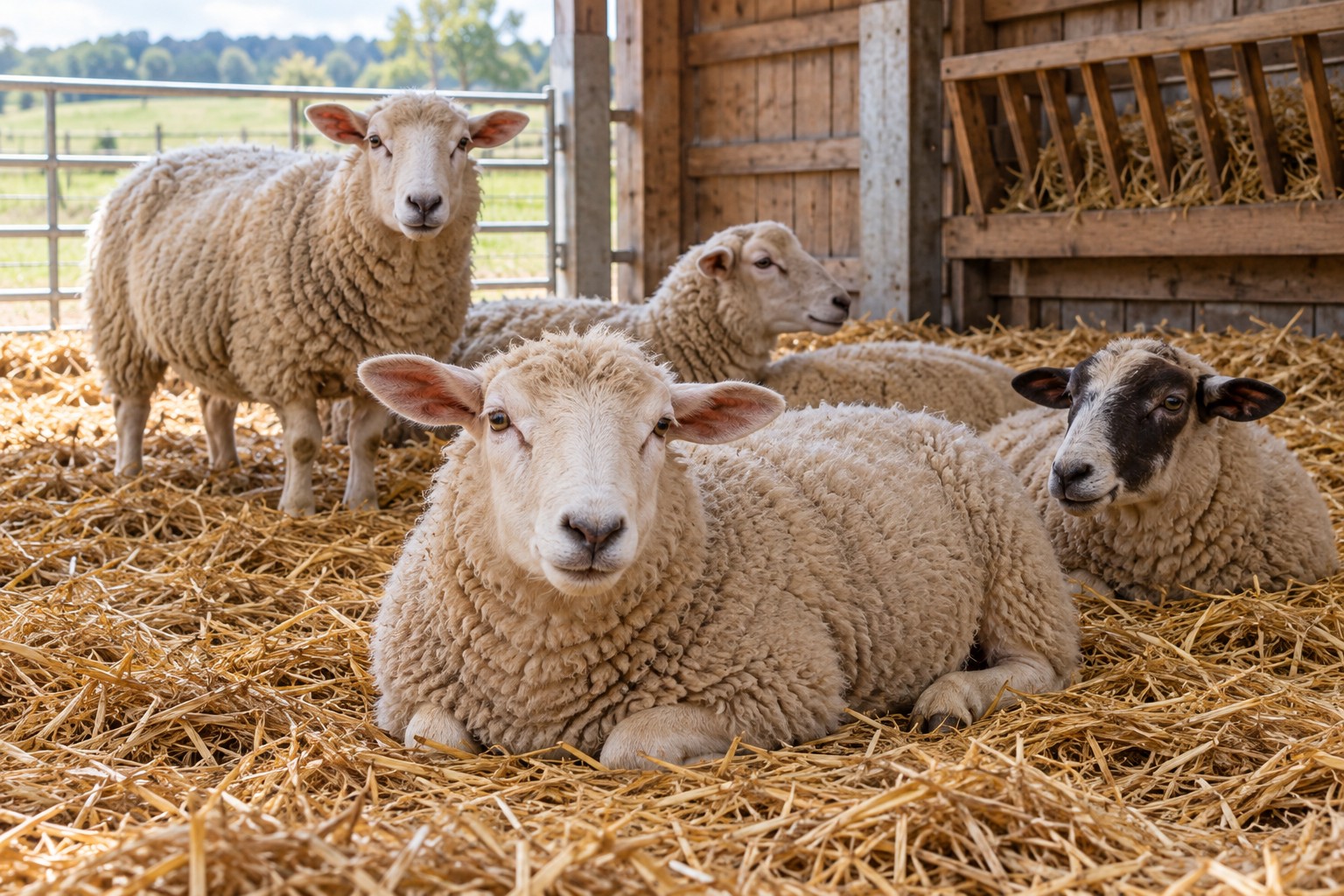
Image disclosure: The featured poster and both supporting images are original AI-generated editorial illustrations. They do not document a particular animal, slaughterhouse or inspection.
Sources
- Danish Veterinary and Food Administration: Religious slaughter
- Library of Congress: Denmark’s 2014 rule
- U.S. Department of State: Denmark report
