
I face a disturbing sight in a remote forest patch in Kerala, southern India. What initially seems like statues are living elephants—57 in total—confined to a small area.
His movement is severely restricted; he cannot lie down, stretch his legs, or even access the empty water container.
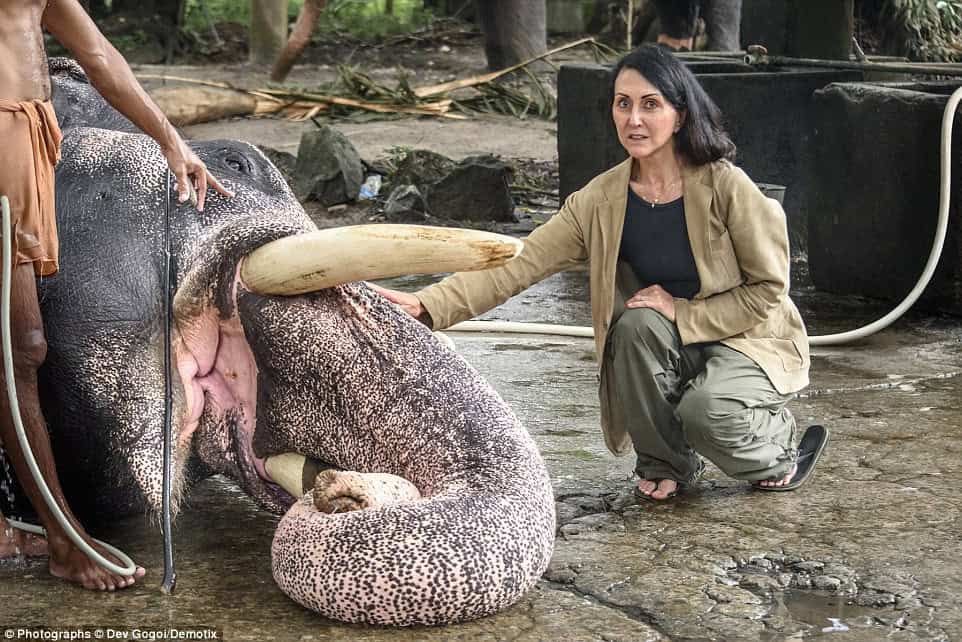
I observe the cruel treatment at the Guruvayur Temple, where these elephants are kept. A temple worker blows a whistle, commanding Nandan to remain still.
I am accompanied by Duncan McNair, founder of Save The Asian Elephants (STAE), and Dr. Nameer, a professor and wildlife expert.
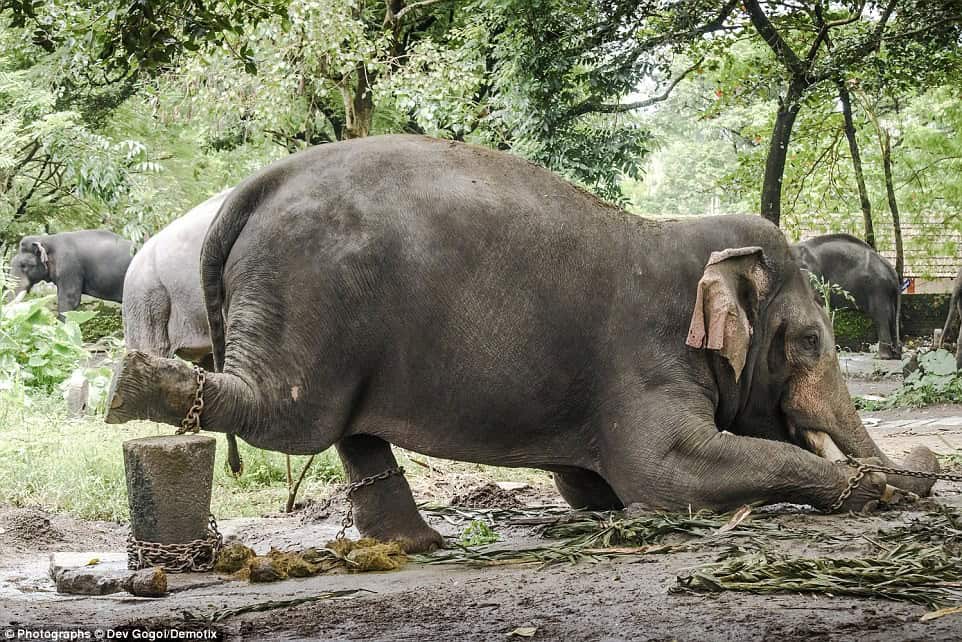
When I asked Dr. Nameer about Nandan’s condition, he revealed that the elephant had been chained in the same spot for 20 years without a single moment of freedom.
Nearby, Padmanabhan, another temple elephant, has a leg hanging at a distressing angle, a result of a deliberate injury inflicted 15 years ago to control him. Harish Sudhakar, a research fellow, confirms that Padmanabhan has been immobile for two decades.
We encounter Lakshmi Narayan, a 15-year-old elephant struggling in a dirty pool of water. His trainer, displaying hostility, fails to get him to lie down due to tight chains. Prof. Nameer translates the trainer’s threat of a beating with iron bars, revealing the harsh punishment Lakshmi faces.
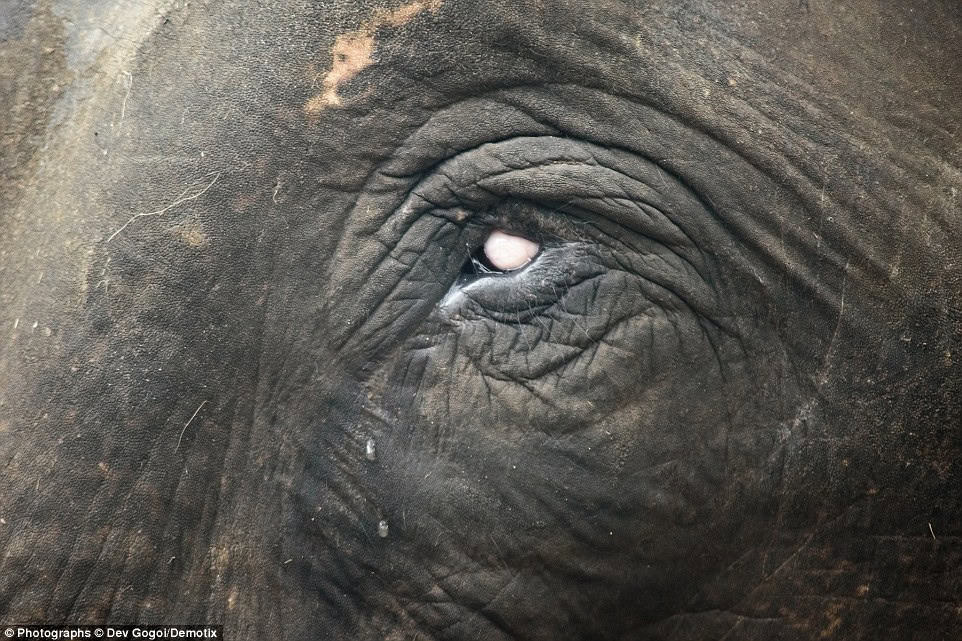
Vinayaka, another elephant, is roughly hosed down by his trainers, who use a stick to keep the animal’s head in place. Prof. Nameer explains that this stick is part of a “traumatic cycle” used to enforce obedience.
Sudhakar describes a common practice where a nail is inserted above the elephant’s toe to control the pain.
At the temple’s entrance stands Devi, an elephant chained for 35 years and never allowed to participate in festivals.
Despite requests for better conditions and attempts to build enclosures, the temple authorities have refused.
Elephants are routinely transported in crowded trucks to participate in numerous festivals, where they are surrounded by noise and chaos.
These elephants face temporary blindness and hormone suppression during their ‘musth’ period, with some even dying from these treatments.
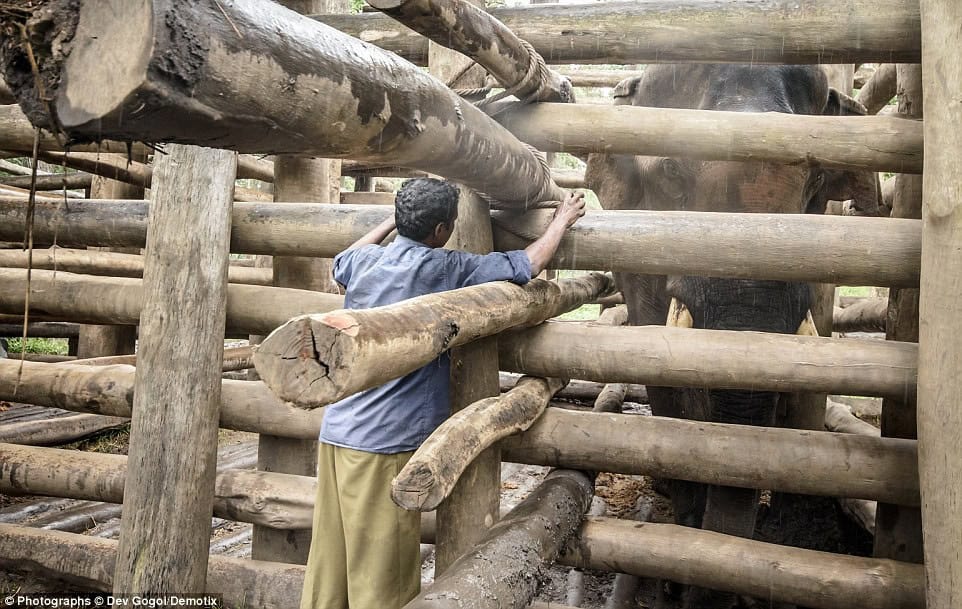
The second most famous elephant in Kerala was forced to participate in a festival despite being in musth, resulting in injuries to his feet to immobilize him.
Their diet consists only of dry palm leaves, far from the varied diet they would have in the wild. They are given minimal water, and their veterinary care is inadequate. Efforts to bring qualified veterinarians to assess their condition have been blocked.
The financial value of each elephant is worth £80,000, and their earnings from festivals and weddings contribute to their exploitation.
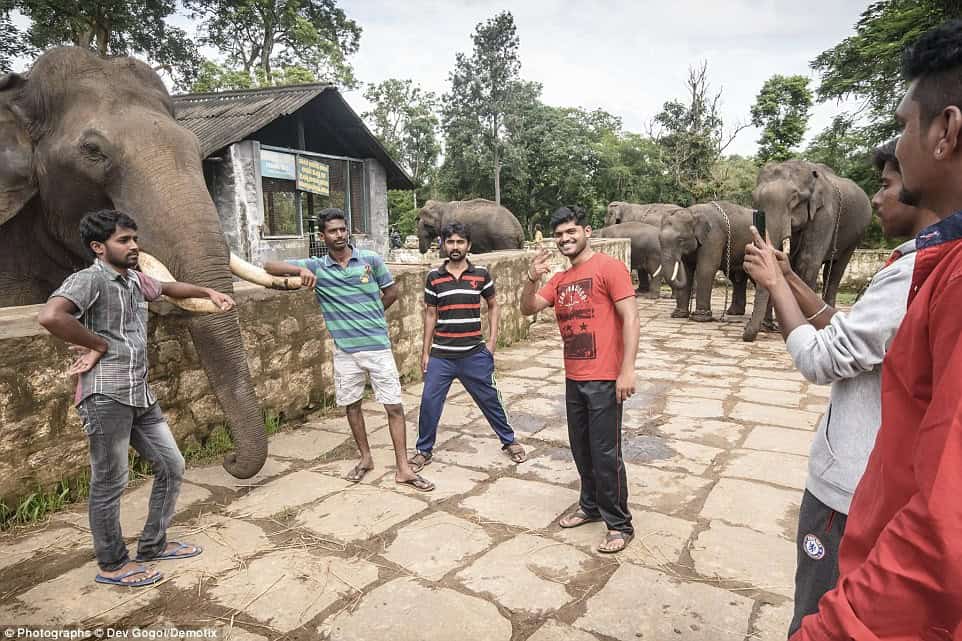
Dr. Sreedhar Vijayakrishnan, a researcher in elephant behavior, explains that such abusive practices have become prevalent in recent decades due to increased profit opportunities.
Previously, elephants were trained using positive reinforcement, but now the methods have become brutal to maximize earnings.
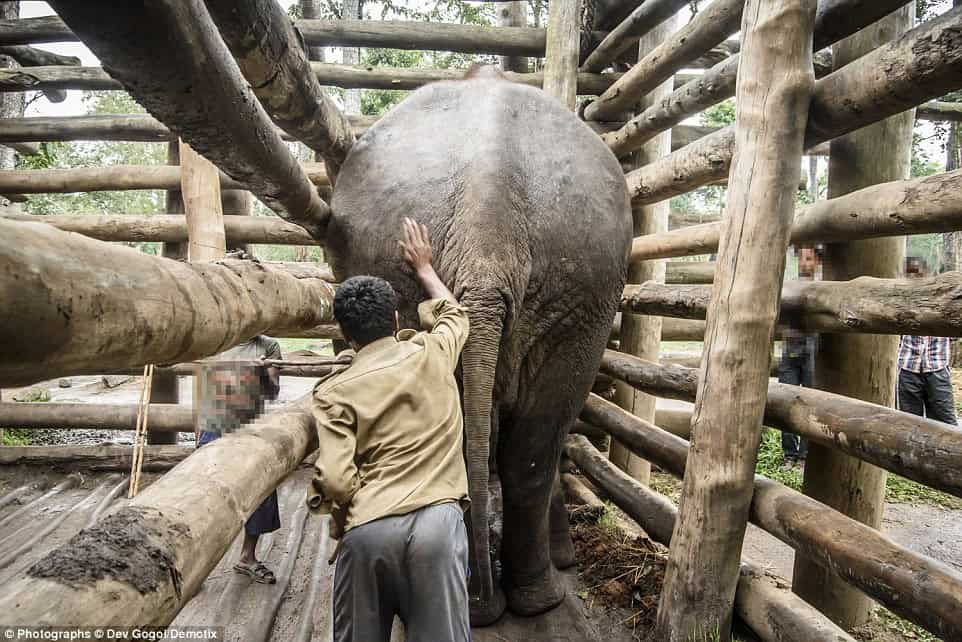
The training process, known as pajan, involves confining elephants in a wooden pen called a kraal. Isolated and starved, they endure severe beatings twice daily for up to six months.
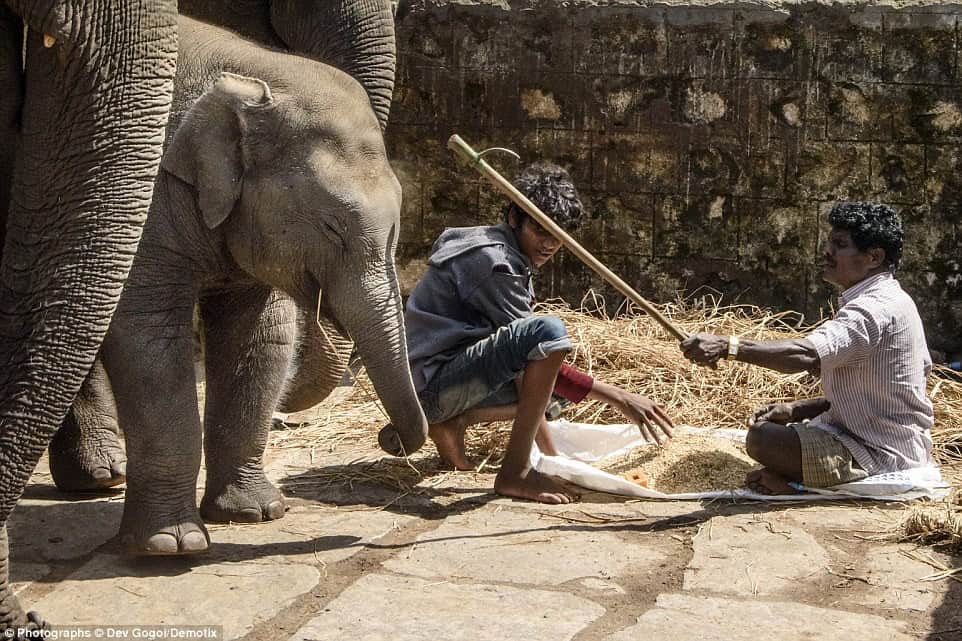
To witness the reality, I traveled to Karnataka, where I encountered a secretive camp housing 30 captured wild elephants. These animals, including babies, were visibly traumatized and subjected to harsh treatment.
A tusker, starved and frightened, retreated from children throwing rocks. A teenage male elephant in the kraal suffered relentless beatings, with no access to shade or water, leading to visible distress.
Elephants are often blinded and beaten, and the training camps exacerbate their suffering. The conservationist I spoke with highlighted the severe conditions and the commercial interests driving this exploitation.
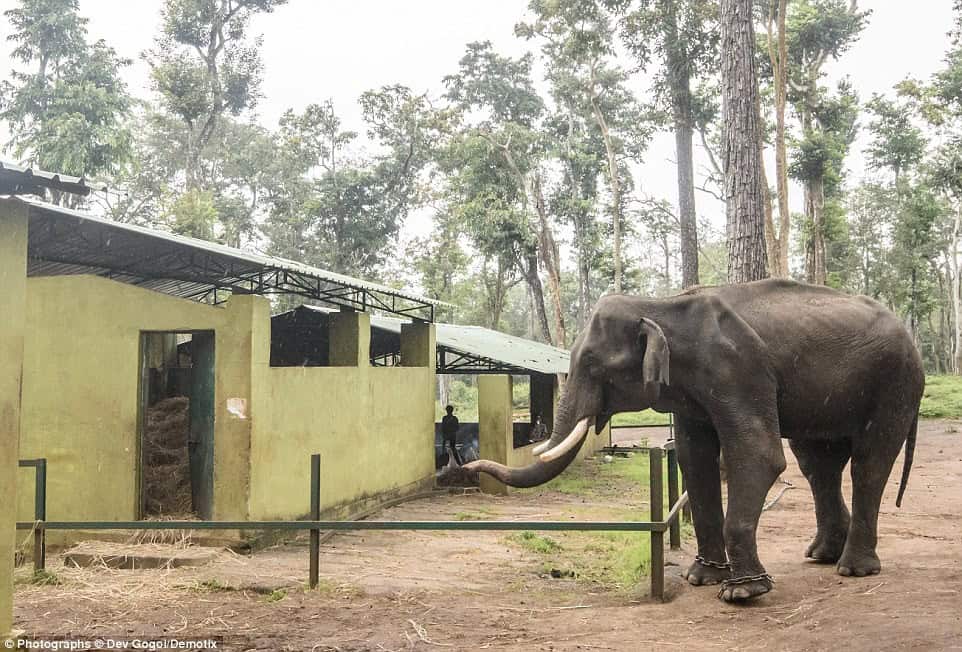
The plight of elephants in India prompted Duncan McNair to establish STAE, aiming to raise awareness and advocate for their release.
The situation is dire, with around 25,000 wild elephants left in India, a significant decline from over a million in 1900 to nearly 4,000 in captivity.
Indian families at the Guruvayur Temple seemed indifferent to the elephants’ suffering and more focused on their religious experience.
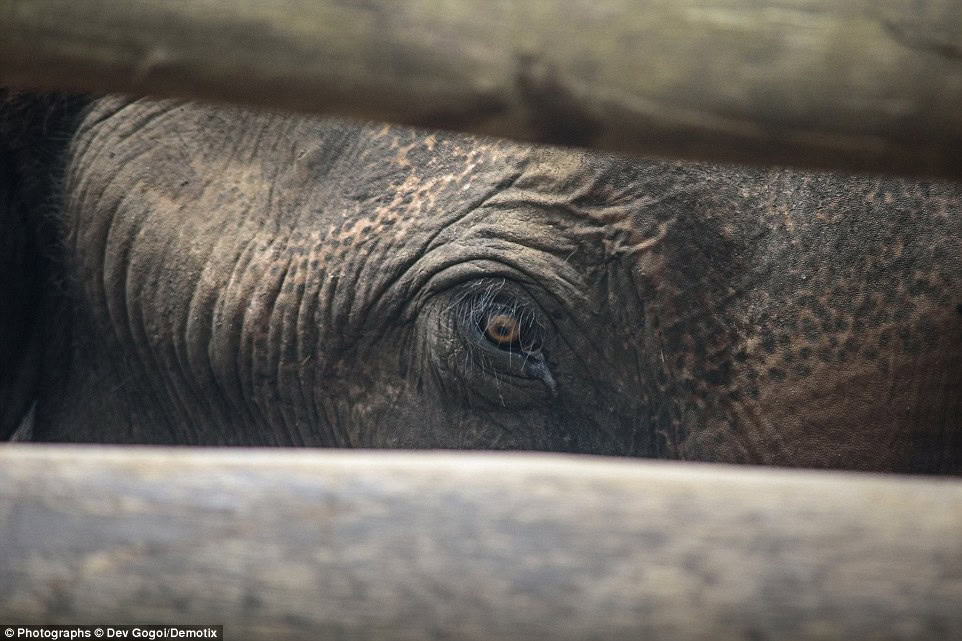
However, experts like Venkita Chalam argue that using elephants in festivals is recent and not rooted in ancient traditions.
Efforts to address this issue include public awareness campaigns and pressure on travel companies to avoid promoting elephant interactions.
STAE has approached travel companies, and some have withdrawn their elephant-related offerings.
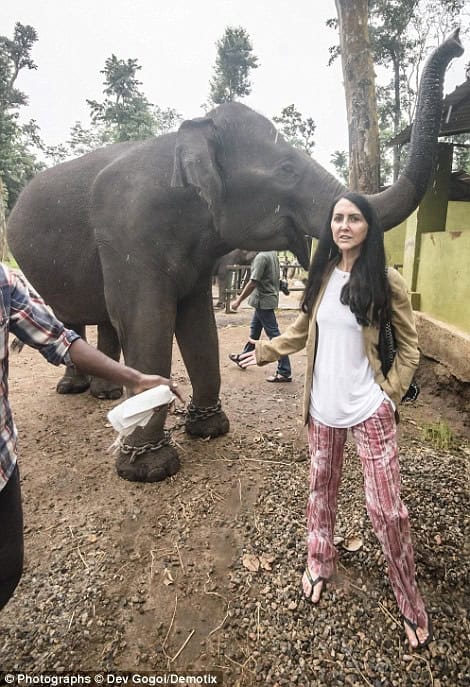
As revealed through my visit, the exploitation of elephants for tourism is a grave issue. To combat this, public pressure and responsible tourism practices are essential.
The suffering of these majestic animals must end, and their release from captivity should be a priority.
Read more Elephant News.


